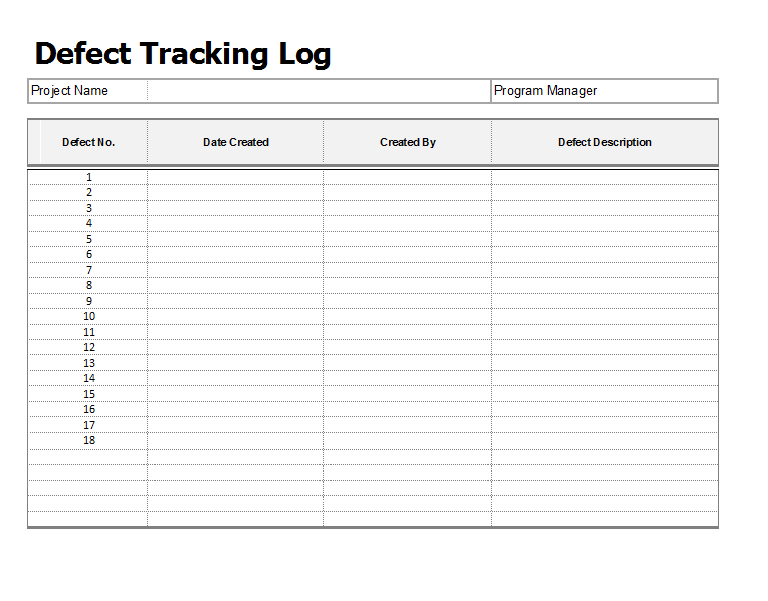
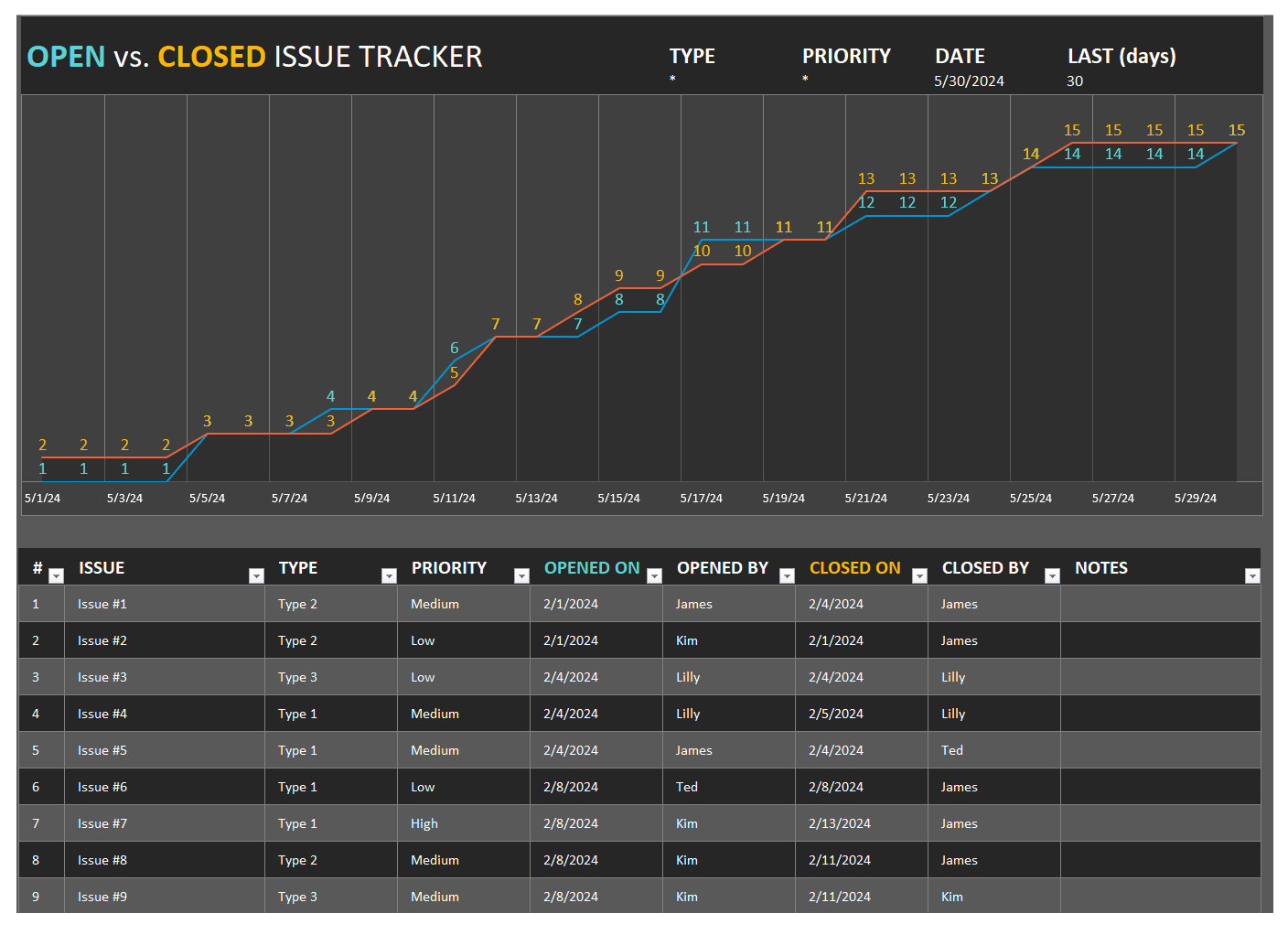
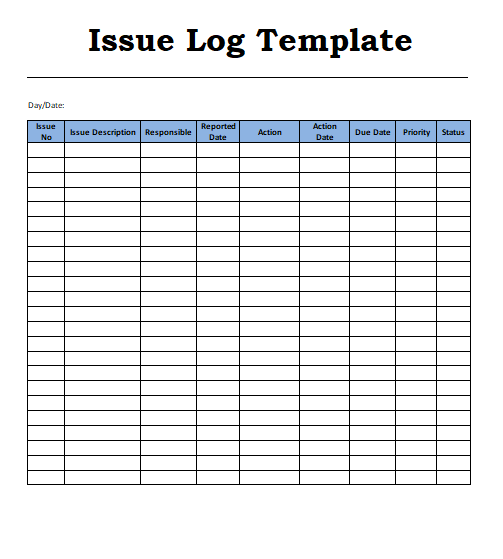
A defect log template is a unique document that is used for preparing a record of defects that occur during construction, project management, software testing, quality assurance, and manufacturing. Basically, it is a structural tool which describes the nature of a defect, its solutions and reasons for it occurring. Moreover, this log helps an organization or a team to systematically observe, record, track, and resolve problems that are discovered. The defect log template is a great resource for determining factors which are beneficial for reducing the chances of re-occurring defects. Besides, a good format is one that contains all the crucial details related to defects that were discovered recently or in the past. In other words, this document enables users to easily strengthen the process that ensures proper accountability and control in productions. This way, a defect log helps a team produce quality products with fewer unresolved problems.
Benefits of Defect Log:
As far as the benefits of using a defect log are concerned, it provides delightful benefits which are given below:
1. A defect log states problems as clearly as possible, so the reader can easily find out the solution to a problem and can fix it according to the right procedure.
2. Once a defect has been analyzed, then it is an easy task to solve the problem by experts and professionals.
3. This document includes the company name, date, time, block for creating different defects, reasons, solutions, and other related information.
4. Businesses and companies use heavy machinery and complicated procedures for smooth production and wish to prevent problems. Therefore, a defect log template can easily be integrated with these procedures to ensure no defect is unaddressed.
5. People prepare a defect log to understand defects, their history and possible solutions to facilitate employees to handle these defects efficiently.
Essential Components of a Defect Log Template:
There are different components in a defect log that are important to understand. Usually, these components are: identification, understanding, reproduction, severity, responsibility, status, and resolution information. Identifying the defect is the primary component that allows a team to start believing the defect. Similarly, understanding the causes, effects, severity and responsibility to handle and resolve a defect is also a crucial component. Finally, regular updating the status of previous defects and those defects that are still unsolved, requires similar significance. To facilitate a team or project manager, a defect log may consist of these components. For instance, defect date reported, category of defect, reported by, assigned to, expected problems or issues, solution recommendation date, and date resolved.